


Residential property prices in Switzerland are expected to keep rising in 2026, with growth of around 2 to 3% according to the latest banking analyses. Wüest Partner is more precise, forecasting +3.1% for single-family homes and +2.8% for owner-occupied apartments. The market is broadly seen as stable, though certain regions, including several Alpine resort areas, are showing clearer signs of strain. For anyone considering a chalet or apartment in Verbier, understanding these national trends helps put local prices in context, which remain structurally higher due to limited land availability and second-home restrictions.
What the Latest Swiss Market Analyses Show
The main market observers (UBS, Wüest Partner, EY) broadly agree on a few points for 2026:
- moderate price growth, around 2 to 3% for the year; UBS points to a slight slowdown in pace as affordability pressure builds, while Wüest Partner is more precise, forecasting +3.1% for single-family homes and +2.8% for owner-occupied apartments
- a market considered stable by nearly all surveyed professionals, despite an uncertain economic and geopolitical backdrop
- a real estate bubble risk index (UBS) that rose from 0.27 points in Q3 2025 to 0.48 points in Q4 2025, the strongest quarterly jump since 1989, and continued climbing to 0.72 points in Q2 2026; it remains below the 1.0 alert threshold
- tighter lending conditions, with banks raising equity requirements and applying stricter sustainability criteria when granting mortgages
In short: the Swiss market remains fundamentally sound, but somewhat tighter than a year ago, with credit access becoming slightly more demanding for buyers.
A Rise Rooted in the Long Term
Since the late 1990s, the Swiss residential market has followed an almost uninterrupted upward trajectory. Even the Covid-19 pandemic did not reverse the trend: residential buildings still gained around 4.1% in value in 2021, supported by strong demand and low interest rates. The 2026 episode fits this underlying pattern rather than marking a sharp turn. The caution flagged by the UBS index concerns the pace of the rise, not the market itself.
Regional Disparities Worth Knowing
Overheating risk isn’t spread evenly across the country. Analyses point to higher risk around Zurich and canton Vaud, while Geneva appears less exposed relative to income growth. Some Alpine tourist regions are also flagged as areas to watch.
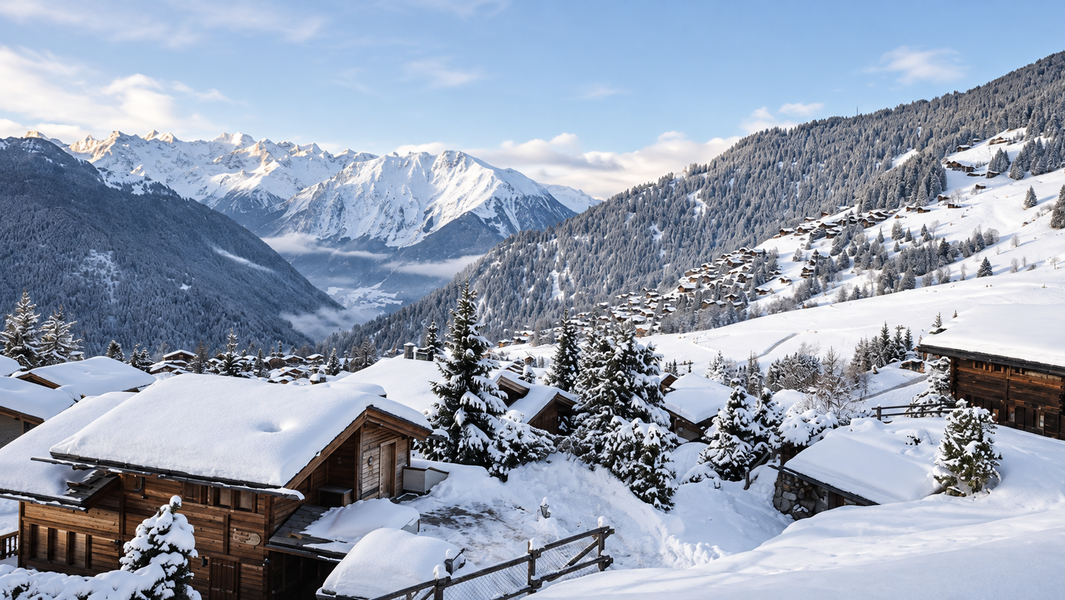
In Verbier and the Val de Bagnes, the dynamic is different: the supply of second homes is structurally limited by the Lex Weber law, which has historically supported the value of existing properties rather than destabilising the market. This built-in scarcity sets Verbier apart from urban areas, where price growth tends to track demographic pressure more closely.
Financing: What Tighter Lending Conditions Mean for Buyers
Beyond price trends themselves, the most concrete change for buyers in 2026 concerns financing. Swiss banks are reviewing their lending criteria: equity requirements are being applied more strictly, and energy efficiency criteria are increasingly factored into loan applications. These requirements vary between lenders and borrower profiles, so it is worth clarifying them directly with your bank or a mortgage broker before moving forward. For a foreign buyer targeting a second home in Verbier, who remains subject to the specific rules of the Lex Koller law in addition to bank criteria, this context makes it all the more valuable to prepare a financing file in advance, ideally with the support of a broker or a local agency familiar with the specifics of Valais.
What This Means in Practice for Buying in Verbier
Key takeaway: sustained international demand and constrained supply make the Verbier market relatively resilient to national trends, but tighter financing conditions are worth planning for.
- prepare a stronger financing file, with solid equity: banks are more demanding than they were two years ago
- avoid comparing national average prices directly to Verbier: limited land and second-home status justify a significant gap
- get an accurate valuation of the property you’re eyeing, or your own, before negotiating, rather than relying on national averages that don’t reflect the Alpine market
- work with a local professional to navigate the specifics of the Lex Koller and Lex Weber laws, which shape the second-home market
For more on the legal framework shaping this market, our article on the new Valais Construction Law details the changes under way for property owners in Verbier. Our analysis of second home versus primary residence looks at another structural choice facing international buyers.
FAQ
Will property prices fall in Switzerland in 2026?
No. Forecasts point to moderate growth (around 2 to 3%), with the market seen as broadly stable, even if the pace may slow slightly in some regions.
Is there a property bubble risk in Verbier?
Bubble risk is assessed at national and regional level, not municipality by municipality. The areas most frequently flagged are Zurich, Vaud and some tourist regions; Verbier isn’t specifically named.
Why do prices stay high in Verbier despite national trends?
The Lex Weber law strictly limits new second-home construction, which constrains supply and supports the value of existing properties, largely independent of national cycles.
Should buyers worry about a price correction in Switzerland in 2026?
A widespread correction is considered unlikely in the short term: demand remains strong and supply limited. A localised correction cannot be ruled out in areas with the highest risk index, such as Zurich or Vaud.
Is 2026 a good time to buy in Verbier?
It depends on your project and financing situation. Tighter bank conditions make local guidance all the more valuable for building a strong file and valuing a property accurately.
Sources
Conclusion
In short, the Swiss property market enters 2026 from a position of strength: controlled price growth, and financing conditions that are more demanding than two years ago.
For Verbier, this national backdrop is paired with a distinct local dynamic, driven by the built-in scarcity of second homes and international demand that shows no sign of slowing. Whether you’re planning a first purchase or simply want to check the value of your property, an accurate valuation remains the best starting point. Our team, with over 40 years of local expertise, is here to support you at every step.


